

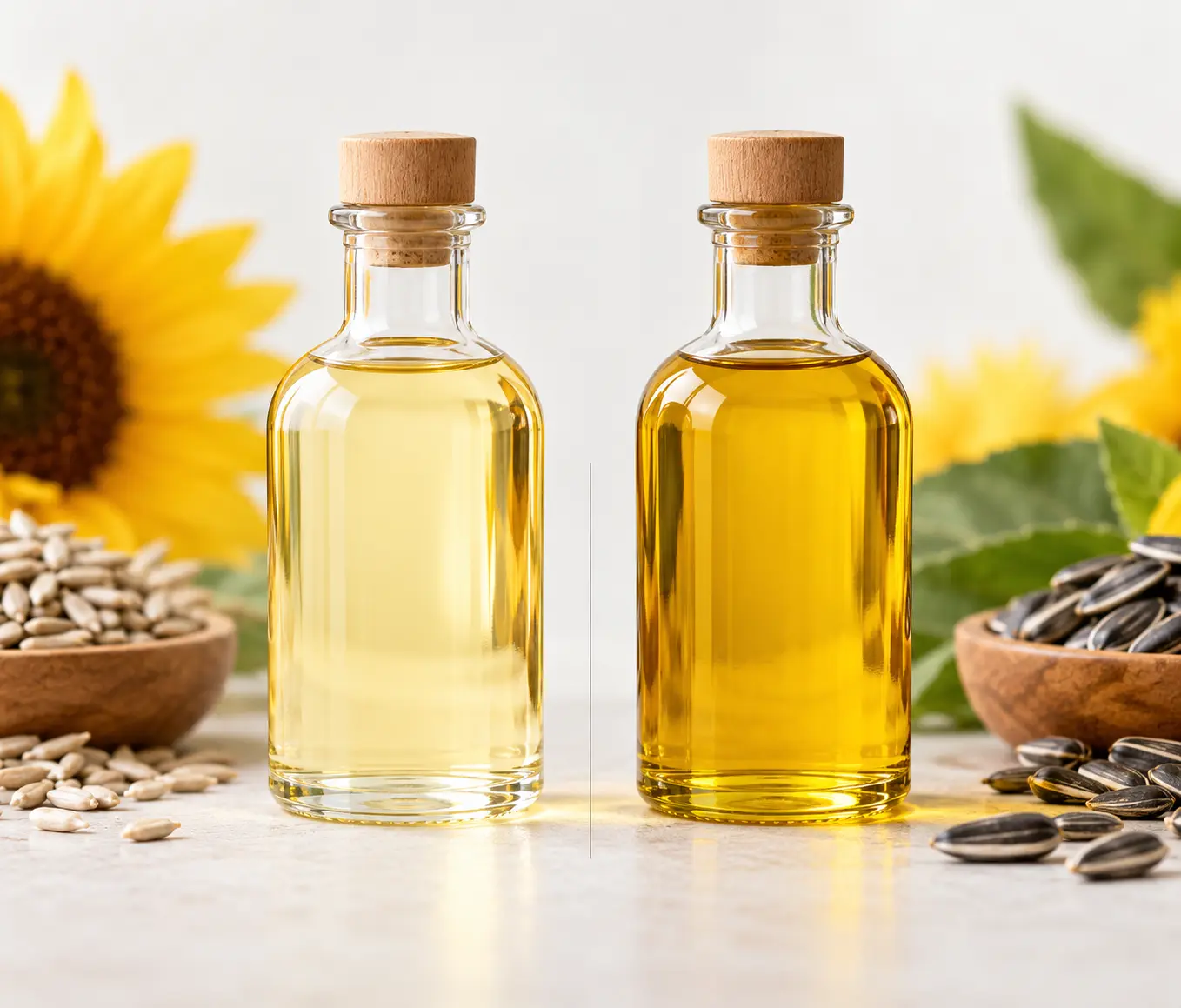
Cold-pressed oil is extracted by mechanical pressure alone and keeps the flavor, color and some of the natural compounds of the seed. Refined oil starts from that same oil and goes through several purification steps that make it neutral, stable and consistent. Neither is “better” in the abstract: each one meets different needs.
At our plant in Córdoba, Spain, we produce organic sunflower, safflower, almond and other seed oils in both versions. Here we explain what happens in each process, what changes in the oil and how to choose the right one for your application.
What is cold-pressed oil?
Cold-pressed oil is extracted from the seed by mechanical pressure, with no added heat and no chemical solvents. The cleaned seed goes into a screw press (expeller), which squeezes it and separates the oil from the solid material. The resulting oil is simply settled and filtered.
“Cold” does not mean the process happens at room temperature. Friction in the press warms the seed paste, but the temperature is kept below roughly 40–50 °C (104–122 °F), depending on the seed and the producer. That is why cold-pressed oil is also called virgin or unrefined oil.
Cold-pressed vs. expeller-pressed oil
Both are pressed mechanically in an expeller and neither uses solvents. The difference is temperature: “expeller-pressed” on its own does not guarantee temperature control, so the oil can get hotter. “Cold-pressed” means the press is run in a way that keeps the oil within that lower temperature range.
The process produces two things:
- Virgin oil: with the natural color, aroma and flavor of the seed, plus its vitamin E, polyphenols and other minor compounds.
- Press cake: the solid part, rich in protein and fiber, used as an ingredient in food and animal feed.
The yield is lower than with solvent extraction, as some oil stays in the cake. In return, the process is simple, clean and fully compatible with organic certification.
What is refined oil?
Refined oil is oil that, after extraction, goes through a purification process to remove impurities, free fatty acids, pigments, waxes and odors. The result is a clear oil, almost free of taste and smell, very stable and with a consistent composition from batch to batch.
For seed oils such as sunflower oil, refining follows these steps:
- Degumming. Phospholipids (gums) are removed, as they make the oil cloudy and speed up spoilage.
- Neutralization (deacidification). Free fatty acids, which cause acidity and rancid flavors, are reduced.
- Bleaching. Adsorbent earths or clays remove pigments such as chlorophylls and carotenoids.
- Winterization (when needed). The oil is chilled so the waxes crystallize and can be filtered out. This keeps it clear at low temperatures and is common for sunflower oil.
- Deodorization. Steam is injected at high temperature under vacuum to remove the volatile compounds that carry odor and flavor.
Organic refined oil: what is different
Refined oil can be organic. The seed must come from certified organic farming and the process must comply with EU organic production rules. This means the oil is never extracted with solvents such as hexane, and only authorized processing aids are used. At Green Crops, we always start from cold-pressed oil and refine it under these conditions.
Refined vs. unrefined oil: the key differences
The core difference is a trade-off between character and stability: cold-pressed oil keeps more of the seed, while refined oil gains neutrality and shelf life.
| Cold-pressed (unrefined) | Refined | |
|---|---|---|
| Process | Mechanical pressing, settling and filtering only | Pressing + degumming, neutralization, bleaching and deodorization |
| Color | Yellow to golden, sometimes cloudy | Light and clear |
| Odor and flavor | Those of the seed | Neutral |
| Vitamin E and minor compounds | Largely preserved | Partly reduced |
| Stability and shelf life | Lower; best kept away from light and heat | Higher |
| Behavior under heat | Best raw or for gentle cooking | Suitable for frying and industrial processing, especially high oleic |
| Batch-to-batch consistency | Varies with the harvest | Highly consistent |
| Typical uses | Dressings, natural cosmetics, gourmet products | Food industry, conventional cosmetics, pharmaceuticals |
Is refined oil bad for you?
No. A properly refined oil is a safe, regulated food, and its fatty acid profile barely changes from the original oil. Refined sunflower oil is still rich in unsaturated fats.
Its bad reputation has some basis, but it needs nuance:
- It loses some minor compounds. True: refining reduces vitamin E, polyphenols and aromas. If you are after those compounds, cold-pressed oil is the better choice.
- “It’s full of chemicals.” The processing aids are removed afterwards and their use is regulated. In organic production, the list of permitted aids is shorter and solvent extraction is not allowed.
- “It’s worse for frying.” The opposite: with no impurities to burn, refined oil, especially high oleic, handles high temperatures better than many virgin seed oils.
The useful question is not whether it is good or bad, but what your product needs.
Which one to choose for each application
Food
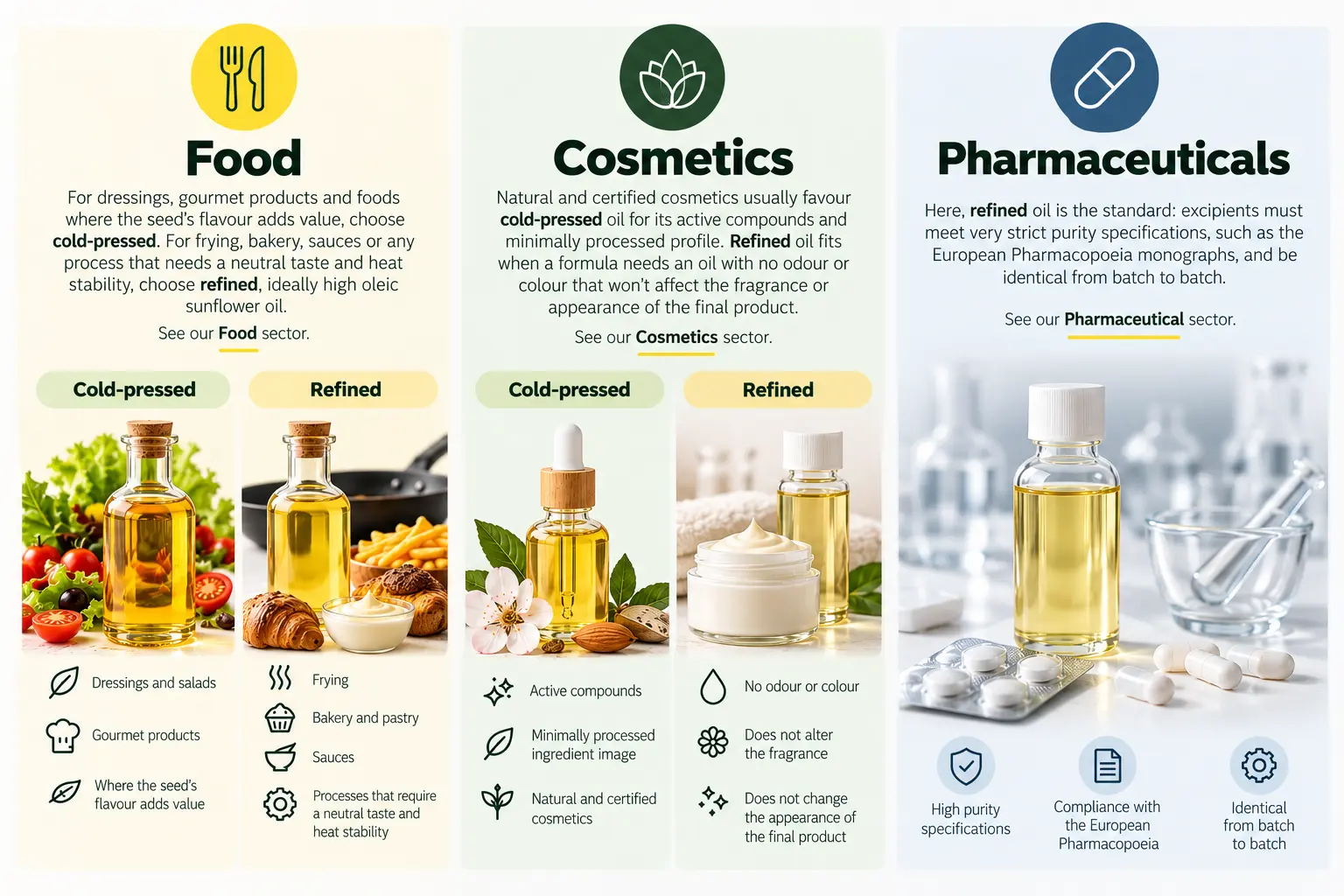
For dressings, gourmet products and foods where the seed’s flavor adds value, choose cold-pressed. For frying, bakery, sauces or any process that needs a neutral taste and heat stability, choose refined, ideally high oleic sunflower oil. See our Food sector.
Cosmetics
Natural and certified cosmetics usually favor cold-pressed oil for its active compounds and minimally processed profile. Refined oil fits when a formula needs an oil with no odor or color that won’t affect the fragrance or appearance of the final product. See our Cosmetics sector.
Pharmaceuticals
Here refined oil is the standard: excipients must meet very strict purity specifications, such as the European Pharmacopoeia monographs, and be identical from batch to batch. See our Pharmaceutical sector.
Frequently asked questions
Refined vs. unrefined oil: which is better?
It depends on the use. Unrefined (cold-pressed) oil keeps more compounds and flavor; refined oil is more stable, neutral and consistent.
What is the difference between cold-pressed and refined sunflower oil?
The sunflower oil sold in supermarkets is almost always refined. Cold-pressed sunflower oil is more golden, tastes of sunflower seeds and is mainly used raw.
Can you fry with cold-pressed oil?
It works for gentle cooking, but it is not ideal for high-temperature frying. A refined high oleic oil is a better fit.
Can refined oil be organic?
Yes, as long as the seed is certified organic and the refining process complies with EU organic production rules.
Organic cold-pressed and refined oils from Spain
At Green Crops, we control the whole chain: we buy seeds from organic farmers in Andalusia, cold-press them at our own plant and, when the customer needs it, refine the oil while keeping its organic certification.
Browse our cold-pressed oils and refined oils, or talk to our team to request technical data sheets and samples.
To learn more about specific oils, read our guides to safflower oil and organic rapeseed oil.